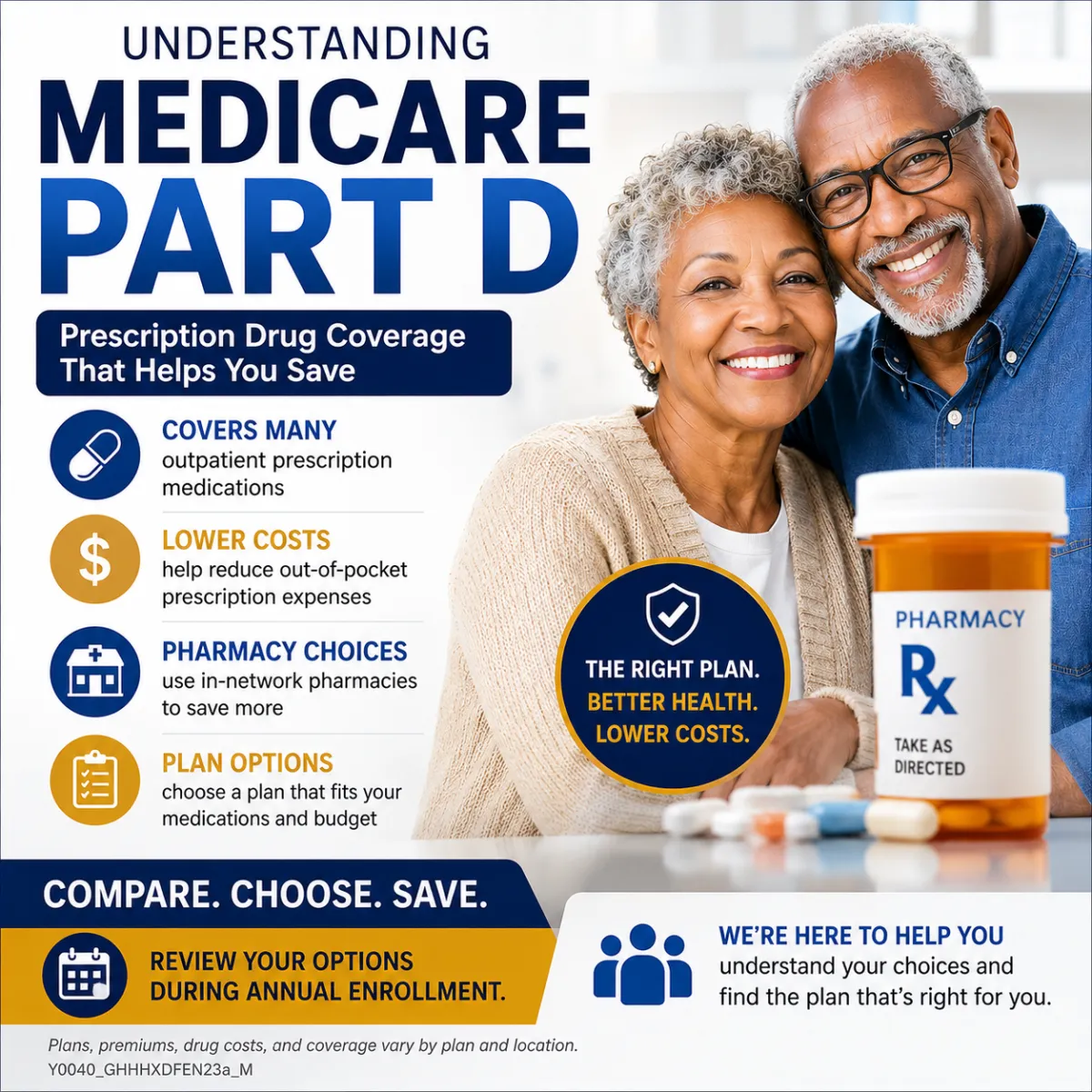
What Is Medicare Part D? Understanding Prescription Drug Coverage
What Is Medicare Part D? Understanding Prescription Drug Coverage
Prescription medications are an important part of staying healthy, especially for many Medicare beneficiaries who manage ongoing health conditions. Medicare Part D helps cover the cost of many outpatient prescription drugs and can help reduce your out-of-pocket medication expenses.
Whether you're enrolling in Medicare for the first time or reviewing your coverage during the Annual Enrollment Period, understanding how Medicare Part D works can help you make informed decisions about your healthcare coverage.
What Is Medicare Part D?
Medicare Part D is the Medicare prescription drug benefit. It is offered by private insurance companies that contract with Medicare and helps cover many outpatient prescription medications.
Part D is available to people who have:
Original Medicare (Part A and/or Part B), or
A Medicare Advantage plan that does not already include prescription drug coverage.
Each Part D plan has its own list of covered medications, known as a formulary, along with its own premiums, deductibles, copayments, pharmacy network, and coverage rules.
Who Is Eligible for Medicare Part D?
You may be eligible for Medicare Part D if you:
Are enrolled in Medicare Part A and/or Part B
Live in the service area of the Part D plan
Meet Medicare enrollment requirements
Enrollment periods and eligibility rules apply, so it is important to understand when you can enroll.
What Does Medicare Part D Cover?
Part D plans generally cover many outpatient prescription medications, including drugs used to treat chronic and acute health conditions.
Coverage commonly includes medications for:
High blood pressure
Diabetes
High cholesterol
Heart disease
Asthma and COPD
Arthritis
Depression and anxiety
Osteoporosis
Many other Medicare-approved prescription medications
Each plan's formulary determines which medications are covered and how much beneficiaries may pay.
Understanding Drug Formularies
Every Medicare Part D plan maintains a formulary, which is the official list of covered prescription drugs.
A formulary includes:
Covered medications
Drug tiers
Coverage requirements
Cost-sharing amounts
Because formularies differ from plan to plan, it is important to confirm that your current prescriptions are included before enrolling.
What Are Drug Tiers?
Most Part D plans organize medications into different pricing levels called tiers.
Typical examples include:
Preferred generic drugs
Generic drugs
Preferred brand-name drugs
Non-preferred brand-name drugs
Specialty medications
Generally, medications on lower tiers have lower out-of-pocket costs than medications on higher tiers.
Preferred Pharmacies and Network Pharmacies
Most Medicare Part D plans have a network of participating pharmacies.
Some plans also have preferred pharmacies, where beneficiaries may receive lower prescription costs than at standard network pharmacies.
Before enrolling, consider whether your preferred pharmacy participates in the plan's network.
What Costs Are Associated With Medicare Part D?
Costs vary by plan and may include:
Monthly premium
Annual deductible (if applicable)
Copayments
Coinsurance
The amount you pay depends on:
Your specific plan
The medication prescribed
The drug tier
The pharmacy you use
Your eligibility for financial assistance programs
Can Medicare Part D Change Every Year?
Yes.
Medicare Part D plans may change annually.
Changes may include:
Monthly premiums
Covered medications
Pharmacy networks
Formularies
Deductibles
Copayments
Coinsurance
Because plans can change from year to year, Medicare beneficiaries are encouraged to review their prescription drug coverage annually during the Medicare Open Enrollment Period.
What If Your Medication Is Not Covered?
If a medication is not included on a plan's formulary, several options may be available depending on your circumstances.
These may include:
Asking your healthcare provider about a covered alternative
Requesting a formulary exception if Medicare requirements are met
Reviewing other available Part D plans during an eligible enrollment period
Specific approval requirements vary by plan.
Does Medicare Part D Cover Every Prescription?
No.
Not every medication is covered by every Part D plan.
Certain medications may be excluded from coverage or subject to requirements such as:
Prior authorization
Step therapy
Quantity limits
Reviewing the plan's formulary can help you understand how your medications are covered.
Medicare Part D and Medicare Advantage
Many Medicare Advantage plans include prescription drug coverage.
These plans are commonly referred to as MAPD (Medicare Advantage Prescription Drug) plans.
If your Medicare Advantage plan already includes prescription drug coverage, you generally do not need to enroll in a separate Medicare Part D plan.
How to Choose a Medicare Part D Plan
When comparing plans, consider:
Your current prescription medications
Monthly premium
Annual deductible
Copayments and coinsurance
Pharmacy network
Drug formulary
Customer service and quality ratings
Selecting a plan based on your current medications and preferred pharmacy can help minimize unexpected prescription costs.
Final Thoughts
Medicare Part D provides valuable prescription drug coverage that helps many Medicare beneficiaries manage the cost of their medications. Because every plan has different formularies, pharmacy networks, premiums, and cost-sharing requirements, reviewing your options carefully each year is an important part of making informed Medicare decisions.
Choosing a plan that fits your healthcare needs, prescription medications, and budget can help ensure you receive the coverage that works best for your situation.
Educational Disclaimer: This article is provided for educational purposes only and should not be considered legal, financial, insurance, or Medicare enrollment advice. Medicare Part D plans, premiums, formularies, pharmacy networks, and benefits vary by plan and may change each year. Always review official Medicare information and your plan documents before making enrollment decisions.
Sam Gross Agency Owner
Senior Advantage Marketing Group
To speak with a licensed insurance agent, click here >>>>> set appointment
