What Is Medicare Part C?
What Is Medicare Part C? A Guide to Medicare Advantage
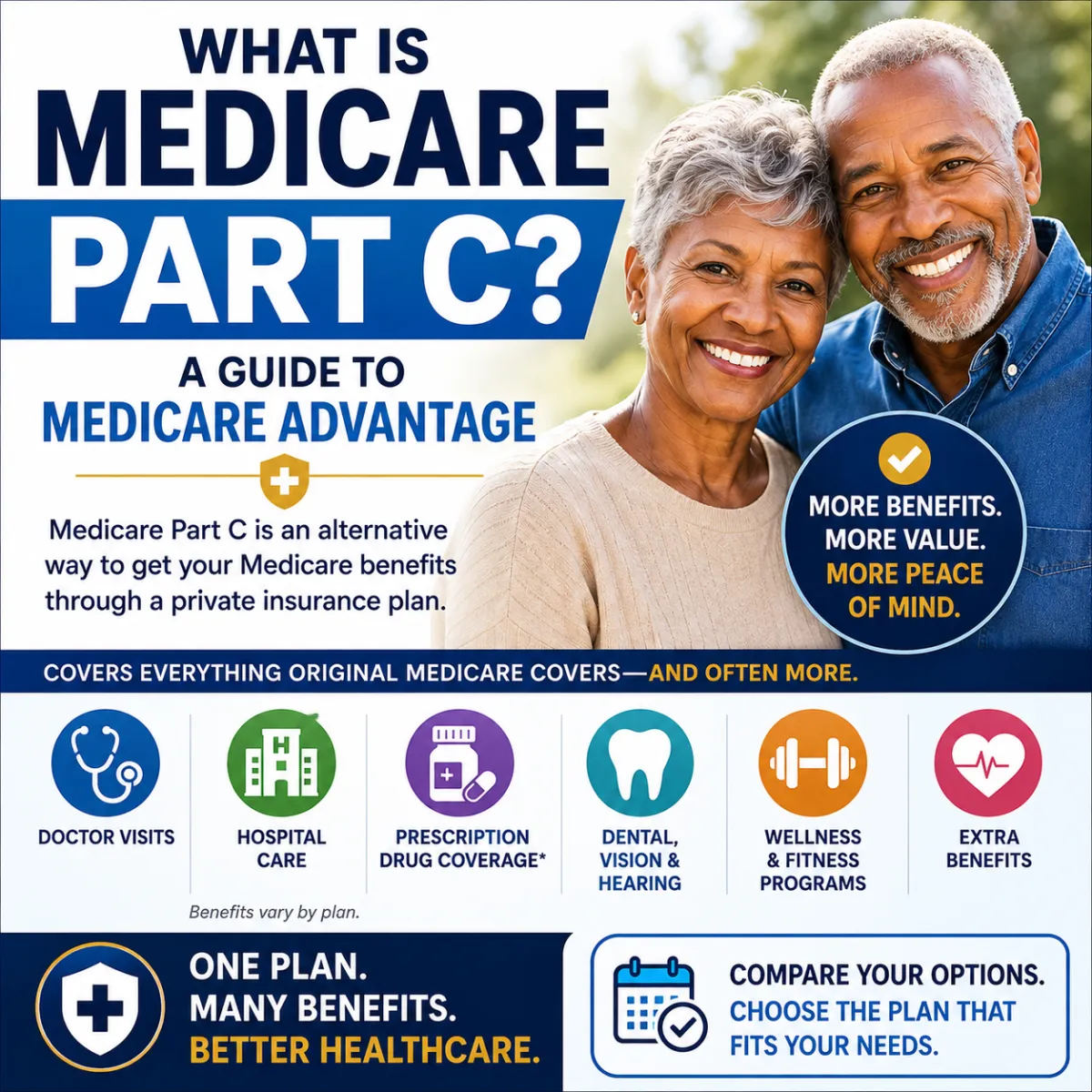
Medicare Part C, also known as Medicare Advantage, is an alternative way to receive your Medicare benefits. Instead of receiving your benefits directly through Original Medicare (Part A and Part B), Medicare Advantage plans are offered by private insurance companies that are approved by Medicare.
These plans are required to provide at least the same medically necessary services covered under Original Medicare, but many plans may also offer additional benefits that are not included with Original Medicare.
Understanding how Medicare Part C works can help you make informed decisions about your healthcare coverage.
What Is Medicare Advantage?
Medicare Advantage (Part C) combines your Medicare Part A (Hospital Insurance) and Part B (Medical Insurance) into one health plan offered by a private insurance company that contracts with Medicare.
Depending on the plan, Medicare Advantage may also include:
Prescription drug coverage (Part D)
Routine dental benefits
Routine vision benefits
Hearing services
Fitness and wellness programs
Telehealth services
Transportation benefits (available with some plans)
Other supplemental benefits, depending on the plan and your eligibility
Benefits, costs, provider networks, and plan availability vary by plan and county.
Who Is Eligible for Medicare Part C?
You may be eligible to enroll in a Medicare Advantage plan if you:
Are enrolled in Medicare Part A and Part B
Live within the plan's service area
Meet any plan-specific eligibility requirements
Some Medicare Advantage plans, such as Special Needs Plans (SNPs), have additional eligibility requirements.
What Does Medicare Part C Cover?
Every Medicare Advantage plan must cover all medically necessary services that Original Medicare covers.
Hospital Care
Coverage generally includes:
Inpatient hospital care
Skilled nursing facility care (when Medicare requirements are met)
Hospice services (covered under Original Medicare)
Limited home health services
Medical Services
Coverage generally includes:
Doctor visits
Specialist appointments
Outpatient procedures
Emergency care
Urgent care
Diagnostic testing
Preventive services
Laboratory services
Durable medical equipment
Many plans coordinate your care through a network of healthcare providers.
Additional Benefits Offered by Many Plans
Many Medicare Advantage plans include benefits that Original Medicare does not typically cover.
Depending on the plan, these benefits may include:
Dental Care
Some plans may provide coverage for:
Routine cleanings
Dental exams
X-rays
Fillings
Dentures
Crowns (plan dependent)
Vision Care
Benefits may include:
Routine eye exams
Eyeglasses
Contact lenses
Vision allowances
Hearing Services
Some plans may include:
Hearing exams
Hearing aid allowances
Hearing aid fittings
Prescription Drug Coverage
Many Medicare Advantage plans include Medicare Part D prescription drug coverage.
However, not every Medicare Advantage plan includes prescription drug coverage, so it is important to review each plan carefully.
How Medicare Advantage Networks Work
Unlike Original Medicare, most Medicare Advantage plans use provider networks.
Common network types include:
HMO (Health Maintenance Organization)
HMO plans generally require members to:
Use in-network providers
Select a primary care physician
Obtain referrals for many specialists
Emergency and urgently needed care are generally covered regardless of network.
PPO (Preferred Provider Organization)
PPO plans offer more flexibility by allowing members to:
Visit both in-network and out-of-network providers
Usually receive lower costs when using in-network providers
Typically see specialists without referrals
Costs may be higher when receiving care outside the preferred network.
Costs Associated With Medicare Part C
Costs vary depending on the plan.
You may be responsible for:
Your Medicare Part B premium
Plan premiums (if applicable)
Copayments
Coinsurance
Deductibles (depending on the plan)
Unlike Original Medicare, Medicare Advantage plans include an annual maximum out-of-pocket limit for covered Part A and Part B services. Once you reach that limit, the plan generally pays 100% of covered in-network services for the remainder of the year.
Medicare Advantage vs. Original Medicare
Original Medicare Medicare Advantage Federal government administers coverage. Private insurance company administers coverage. Part A and Part B separate. Combines Part A and Part B into one plan. Usually no provider network. Most plans use provider networks. No annual out-of-pocket maximum. Includes an annual out-of-pocket limit for covered services. Does not usually include routine dental, vision, or hearing. Many plans include additional benefits. Prescription drug coverage requires a separate Part D plan. Many plans include prescription drug coverage
Things to Consider Before Choosing a Medicare Advantage Plan
When comparing plans, consider:
Your preferred doctors and hospitals
Prescription medications
Monthly premiums
Copayments and coinsurance
Provider networks
Travel needs
Extra benefits that are important to you
Overall healthcare budget
Every person's healthcare needs are different, so comparing available plans carefully is important before enrolling.
Is Medicare Part C Right for You?
There is no one-size-fits-all Medicare solution.
Some people prefer the nationwide provider flexibility of Original Medicare, while others appreciate the convenience of having medical, hospital, prescription drug, and additional benefits combined into a single Medicare Advantage plan.
Understanding your healthcare needs, budget, and preferred providers can help determine which option best fits your situation.
Final Thoughts
Medicare Part C, or Medicare Advantage, offers an alternative way to receive your Medicare benefits through private insurance companies approved by Medicare.
These plans provide all the services covered by Original Medicare and may also include additional benefits such as prescription drug coverage, dental, vision, hearing, fitness, and wellness programs. Because benefits, provider networks, and costs vary by plan, reviewing your options each year is an important part of making an informed Medicare decision.
Educational Disclaimer: This article is provided for educational purposes only and is not intended to provide legal, financial, insurance, or Medicare enrollment advice. Medicare Advantage plans, costs, provider networks, and benefits vary by plan and location. Always review official Medicare information and plan documents before making enrollment decisions.
Sam Gross Agency Owner
Senior Advantage Marketing Group
To speak with a licensed insurance agent, click here >>>>> set appointment
